DOR is alpha particle radiation and HIM is Orgon/ restructuring, adding order/life.
IMO DOR is neutron radiation, otherwise I agree.
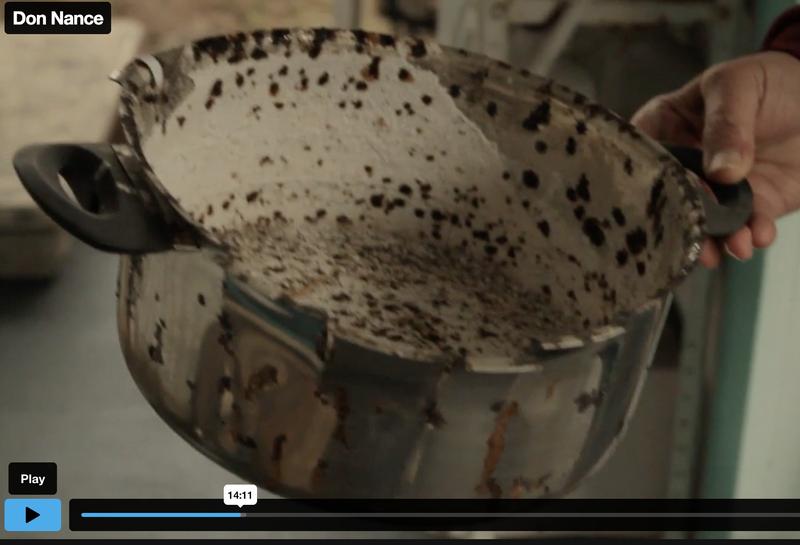
Check this pic from Don Nance of a stainless steel pot used to burn ormus precipitate using an electric hot plate (probably also sulfur)
[
LINK].
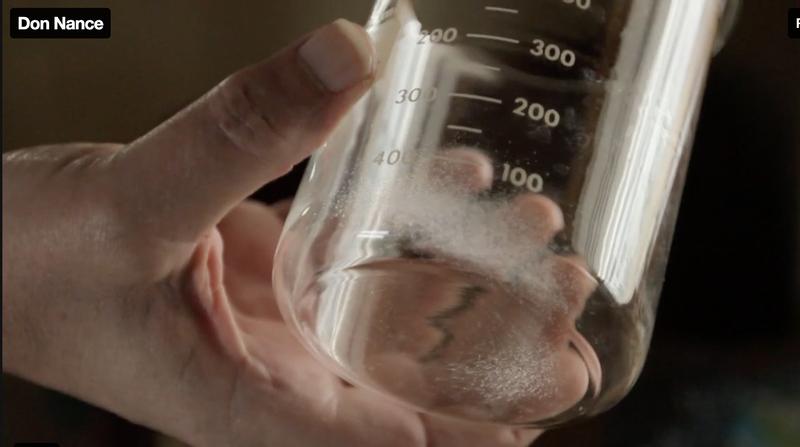
Also this pic from the same substance placed in glass for a few minutes.
IMO, not only is this radiation only possible from neutrons, but it would also require the radiation to be
super high energy neutrons.
[NB: In the video Don, says he believes it was beta and gamma radiation, obviously I disagree.]
Is it really one or the other or can both happen simultanously? What do you think?
I would say one reaction or the other occurs, but I suppose it might be the case that's both simultaneously with one more visible than the other.
I find it difficult to see sulphur as something bad as they are crucial for plants. Have you heard of the biodynamic nutrition chain?
No, haven't heard of that, I'll check it out.
And you're right sulfur can't really be that bad since it's essential to life.
I thought with oxygen only the good reaction can happen and with sulphur and fluor only the bad i thought. Not?
That's what I previously thought.
But as much as I hate to say it, the black sand experiment has shown that I'm wrong.

So IMO either, my whole HIM framework is totally wrong...OR...sulfur is simply a catalyst which initiates HIM reactions, and that it's the external conditions that steer the good or bad reaction (Eg: AC EMF, full moon, etc).
I was thinking about it and recalled that
Terry did the copper to gold reaction and he was using sulfate ions (from sulfuric acid).
So it can't be as simple as I previously assumed.
I was thinking maybe sulfur is a metaphorical blasting cap for initiating an explosion in a stick of dynamite, but in this case a stick of highly charged HIM substance.
TBH, I'm feeling pretty burnt out from this theoretical stuff. I actually want to take a break from it and hand the torch down to others such as yourself for a spell.
Also as there is not always protium the HIM is otherwise attached to H atoms in molecules, not?
Yes, IMO that's the default mode in nature, is to find HIM usually stuck to the hydrogen in sugars and oils.
IMO it also sticks to gaseous hydrogen, but that's not necessarily proven yet.
When I understood right, oxygen can only accelerate it, but not hold onto it like hydrogen atoms, right? It more like frees it and is pulled towards it, but its not really attached, not?
Well....there was that experiment done by Reich where he burned copper in air and found it started producing bions but it wouldn't produce any before being burned.
IMO that proved conclusively that the source of the bions (aka HIM) could only have been the oxygen in the air.
So for me, it seems that oxygen does several things:
> "charges" HIM particles in solutions when applied as peroxide or ozone, etc
> attracts "charged" HIM particles like a magnet attracts iron filings.
> holds HIM particles within a metal oxide in a kind of protective umbrella
> is the actual original source of HIM in a metal oxide before the reaction takes place (at least in the case of Reichs copper oxide)
L> so based on the above point, you can also say that gaseous oxygen has the capacity to hold on to HIM all on its own.
Do you think without hydrogen in the air, oxygen would still suck the HIM away? Or would accelerate ot even further?
Yes, IMO even with no hydrogen around and just oxygen, the HIM will just stick to the oxygen as per usual.
you write they like tight spaces even more than air. ever considered just using active charcoal to hold them in the bottle?
I have, but the problem then becomes getting them out of the charcoal again.
AFAIK charcoal can't be dissolved in any solvents.